
Smartwhip vs FastGas: Which Cream Charger Brand Is Right for You?
These two cylinders get compared more than any other pair in our range, and the comparison is genuinely interesting because they are not trying to be the same product. One is the cylinder kitchens standardise on. The other is the cylinder kitchens switch to when someone finally works out the cost per charge. Both are 99.9% food-grade N₂O (E942), both fit standard 0.5L and 1L professional dispensers, and both will make you excellent cream.
So the honest version of this article is not “which is better.” It’s “which of these two very different arguments applies to your kitchen.”
The specs, side by side
| Smartwhip Silver 640g | FastGas 670g | |
|---|---|---|
| Gas weight | 640g | 670g |
| Purity | 99.9% food-grade N₂O (E942) | 99.9% food-grade N₂O (E942) |
| Approx. 8g charge equivalent | ≈80 charges | ≈84 charges |
| Approx. finished cream | ≈4–4.8 L | ≈4.2–5.0 L |
| Dispenser fit | Standard 0.5L & 1L | Standard 0.5L & 1L |
| Flavour options | Unflavoured | Original, Coconut, Strawberry |
| Single cylinder price | $79.99 | $39.99 |
| Case sizes | 6, 12, 24, 48 | 6, 12, 24, 48 |
Prices are current at the time of writing, per single cylinder, before case discounts.
The number that decides it for most kitchens
Divide the single-cylinder price by the charge count and the two products separate immediately:
- Smartwhip Silver 640g — $79.99 ÷ ≈80 charges ≈ $1.00 per charge
- FastGas 670g — $39.99 ÷ ≈84 charges ≈ $0.48 per charge
FastGas is roughly half the cost per charge. That is not a rounding difference or a promotional blip, it is the structural gap between the two, and case pricing narrows it proportionally rather than closing it.
Put it in service terms. A dessert station pulling 20 charges a day runs about $9.60 a day on FastGas and about $20.00 on Smartwhip. Over a 300-day trading year that’s roughly $2,880 versus $6,000 — call it $3,100 a year, for gas that performs the same job at the same purity. If you want to run that math against your own volume rather than ours, our cost-per-serving calculator walks through it properly.
What “≈80 charges” actually means
Both figures are approximations, and they should be read as such. A cylinder doesn’t dispense in discrete units the way a threaded 8g charger does — you’re metering gas into a dispenser, so the real charge count depends on how much you release per fill, the size of the dispenser, the fat content of your cream, and how cold everything is when you start.
The ≈80 and ≈84 numbers are useful for comparing two cylinders against each other, which is exactly what we’re doing here. They are less useful as a promise about your Tuesday. If you’re planning purchasing around them, build in a margin rather than treating them as a hard floor — and note that the ratio between the two products holds regardless of which direction your real-world yield drifts.
Purity is not the differentiator
It’s worth saying plainly because the marketing around cylinders often implies otherwise: both of these are 99.9% food-grade N₂O under the same E942 food-additive designation. There is no quality gap to pay for here. Whatever you’re choosing between, it isn’t the gas.
That’s genuinely clarifying, because it means the decision collapses to two questions — cost per charge, and how much you value running one format everywhere. Everything else is noise.
So why would anyone buy the Smartwhip?
Because cost per charge is not the only line item in a kitchen, and treating it as though it were is how you end up with four different cylinder formats and a walk-in nobody can inventory.
The Smartwhip argument is standardisation. It’s the diamond-pattern cylinder from a professional range that a lot of venues build their entire gas system around — one supplier, one format, one part number across every station, one reorder line. When you have several sites, or several stations that all need to behave identically on a Saturday night, the predictability has real operational value that doesn’t show up in a per-charge calculation.
There’s also brand consistency for its own sake, which sounds like marketing until you’ve watched a chef refuse to change anything about a recipe that currently works.
What we won’t do is oversell it. Our own Smartwhip product pages say the quiet part out loud: if your priority is the lowest possible cost per charge rather than brand consistency, look at the cheaper cylinders in the same category. We’d rather you bought the right one and came back than bought the expensive one once.
The FastGas argument beyond price
FastGas builds the 670g around mixology, and the flavoured line is the practical reason to pick it rather than just the cheap reason. Alongside Original it comes in Coconut and Strawberry, and those carry through into foams, espumas and cocktail applications without adding liquid or sugar to the recipe — which is the actual problem with flavouring a foam by conventional means.
All three flavours are the same price, so choosing one costs nothing. That is a genuinely unusual bit of pricing and it’s worth exploiting if you run a cocktail programme. Full range on the FastGas brand page.
The 670g fill also means it holds slightly more gas than the common 640g cylinders — a small edge, but it compounds across a case.
One practical caveat on the flavoured cylinders: order a single before you build a menu item around one. Flavour perception through an aerated foam is not the same as flavour in a liquid, and how far Coconut or Strawberry carries depends heavily on what you’re pairing it with and how much sugar is already in the base. It’s a cheap thing to test properly and an expensive thing to assume, and a single cylinder costs less than one wasted service.
-
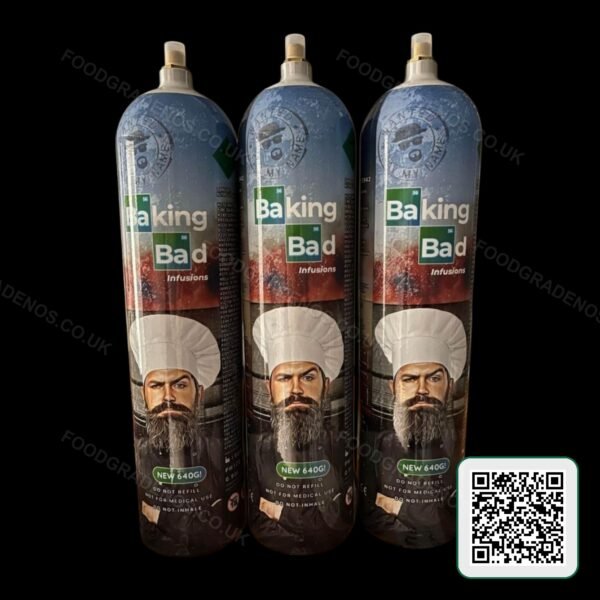 Baking Bad Baking Bad Infusions 640g CylinderIn stockPrice range: $41.99 through $1,612.42
 -
 Cream Deluxe Cream Deluxe Black Cobra 666g Food-Grade CylinderIn stockPrice range: $43.99 through $1,592.57
 -
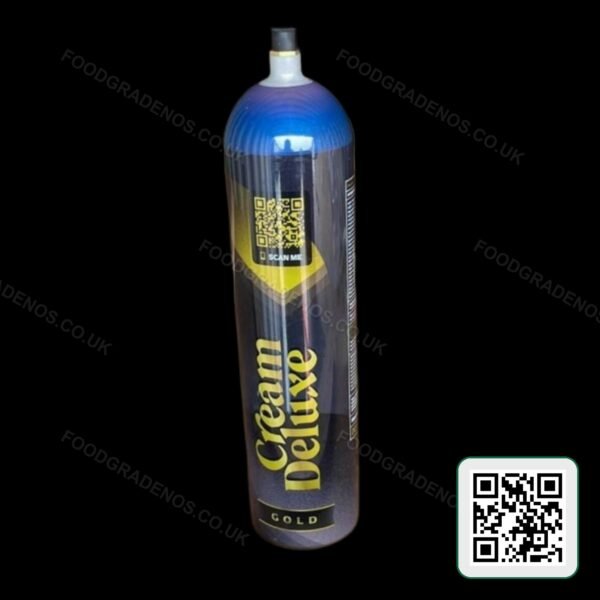 Cream Deluxe Cream Deluxe Gold 640g Food-Grade CylinderIn stockPrice range: $39.99 through $1,529.49
Shop all cream chargers & whippers
Which one should you buy?
Buy FastGas 670g if:
- Per-charge cost is the number your owner or GM actually asks about
- You run a bar or dessert kitchen at enough volume that gas is a visible line item
- You want flavoured N₂O for foams, espumas or cocktails at no price premium
- You’re charging daily rather than occasionally
Buy Smartwhip Silver 640g if:
- You want one cylinder format standardised across multiple stations or sites
- Consistency and repeatability across a long service matter more than unit cost
- You’re already running a Smartwhip system and changing formats creates more problems than it solves
- You’re willing to pay the premium tier deliberately, with the per-charge gap in front of you
Buy neither if your volume is genuinely low and irregular — a box of 8g chargers will serve you better than a cylinder you finish three months later. Cylinders earn their keep through throughput.
A note on switching
Both run on standard 0.5L and 1L professional dispensers, so moving between them doesn’t mean replacing equipment — but check your own dispenser before committing a whole service to any cylinder format, because “standard” does a lot of work in that sentence and the exception is always found on a Friday. If you’re new to cylinder-based charging altogether, our beginner’s guide to using a cream whipper covers the mechanics first.
For volume pricing on either brand, case sizes run 6, 12, 24 and 48 on both, with the per-cylinder price dropping around 20% at the largest tier on the Smartwhip range. If you’re ordering at that level, bulk & trade is the right starting point.
The uncomfortable summary is that for most Canadian kitchens reading this, FastGas is the rational choice and Smartwhip is the deliberate one. Both are defensible. Only one of them is defensible without doing the arithmetic first.