
Best N2O Cream Chargers for Restaurants and Cafés in Canada (2026 Buyer’s Guide)
Home users pick a cream charger brand more or less on price and whatever’s in stock. A restaurant or café kitchen doing this every service can’t afford to think that casually about it — the wrong format costs real money over a month, and running out mid-service costs more than money. So this guide skips the “which brand is best” framing entirely and starts with the question that actually determines the answer: how much whipped cream is this kitchen going through in a week?
Three things that actually matter for commercial use
Strip away the marketing and a commercial-grade cream charger comes down to three variables, in order of importance:
1. Purity — food-grade, no exceptions
Every charger and cylinder in this guide is food-grade, E942-compliant N₂O. That’s not a premium tier here — it’s the baseline, and it’s worth confirming with any supplier before ordering, because the difference between food-grade and industrial-grade gas is a real one, not a labelling technicality. If you want the full breakdown, our food-grade vs industrial nitrous oxide guide covers why it matters (written for our UK sister site, but the chemistry doesn’t change at the border).
2. Charge count per unit
This is the number that actually drives your cost per serving, and it’s the one most buyers skip past to look at the sticker price instead — which is backwards. A $39.99 cylinder that yields 84 charges is cheaper per serving than an $10.99 box of chargers that yields 10, even though the second number looks smaller on the shelf.
3. Format — chargers vs cylinders vs tanks
This is where volume actually decides the purchase:
- 8g chargers — threaded, single-use, for dispensers that specifically take them. Right for very low or irregular volume, or as backup stock.
- 600–700g cylinders — the standard commercial format, screw onto a 0.5L–1L dispenser, good for a busy café doing a few dozen servings a day.
- 2kg tanks — for kitchens charging through cylinders daily. Fewer swaps, lower cost per charge, more counter space needed.
The actual numbers, current pricing
Here’s what that looks like against our live catalogue — real prices, pulled at the time of writing, not list-price estimates:
- Mosa 8g chargers — $10.99 a box of 10 → ≈$1.10 per charge. Highest per-charge cost of any format; the trade-off is zero cylinder handling and no wasted gas if a shift ends mid-cylinder.
- FastGas 670g cylinder — $39.99, ≈84 charges → ≈$0.48 per charge. The best per-charge cost in the standard cylinder range, which is why it’s usually our first recommendation for a café doing moderate daily volume.
- GreatWhip 640g cylinder — $39.99, ≈80 charges → ≈$0.50 per charge. Same price bracket as FastGas, marginally fewer charges per unit.
- Smartwhip Silver 640g cylinder — $79.99, ≈80 charges → ≈$1.00 per charge. Roughly double the per-charge cost of FastGas for the same charge count — the premium here is brand consistency and fill reliability, not more gas.
- Exotic Whip 2kg tank — $65.99, ≈250 charges → ≈$0.26 per charge. The cheapest per-charge cost on the list by a wide margin, and the clear pick once daily volume justifies the format.
- Rotass Whip 2000g tank — $59.99, ≈250 charges → ≈$0.24 per charge. Marginally ahead of the Exotic Whip tank on price for the same yield.
The pattern holds across every commercial catalogue we’ve priced: bigger format, lower per-charge cost, right up until you’re buying more gas than you can use before your next order arrives. That last part is the actual constraint, not brand loyalty.
-
 Baking Bad Baking Bad Infusions 640g CylinderIn stockPrice range: $41.99 through $1,612.42
 -
 Cream Deluxe Cream Deluxe Black Cobra 666g Food-Grade CylinderIn stockPrice range: $43.99 through $1,592.57
 -
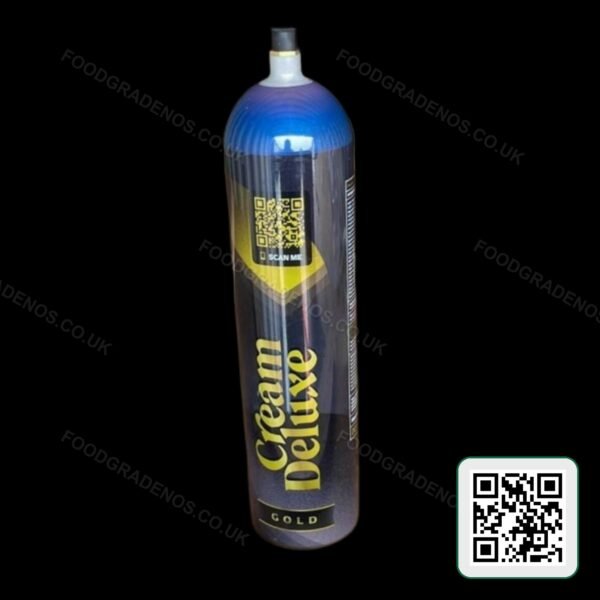 Cream Deluxe Cream Deluxe Gold 640g Food-Grade CylinderIn stockPrice range: $39.99 through $1,529.49
Shop all cream chargers & whippers
Our picks by volume
Under 20 servings a day: 640–670g cylinders
FastGas 670g is the honest default here — best per-charge cost in the cylinder range, no brand premium to justify. If your dispenser or house style leans toward a specific brand, GreatWhip 640g sits close behind on both price and yield.
20–50 servings a day: still cylinders, buy by the case
The math doesn’t change the recommendation yet, but the ordering pattern should — case pricing through a trade account brings the per-unit cost down further than single-cylinder pricing, and it’s the difference between a weekly reorder and a monthly one.
50+ servings a day: 2kg tanks
This is where tanks earn their counter space. At roughly half the per-charge cost of a standard cylinder, a kitchen doing this volume recovers the extra footprint within a few weeks of ordering.
One thing worth saying plainly
None of this changes if you swap brands within a format — a 640g cylinder from one reputable food-grade supplier performs within a rounding error of another. The format decision is where the actual savings live, not the logo on the cylinder, which is a slightly less exciting thing to write about than “the best brand” but a considerably more useful thing to know before you place next month’s order.
If you’re ordering at a volume where any of this matters, our bulk & trade page covers how case pricing and trade accounts work, and the full cylinder range is there to compare directly.